Lighthouse Lymphedema Network
Shining Light On Lymphedema

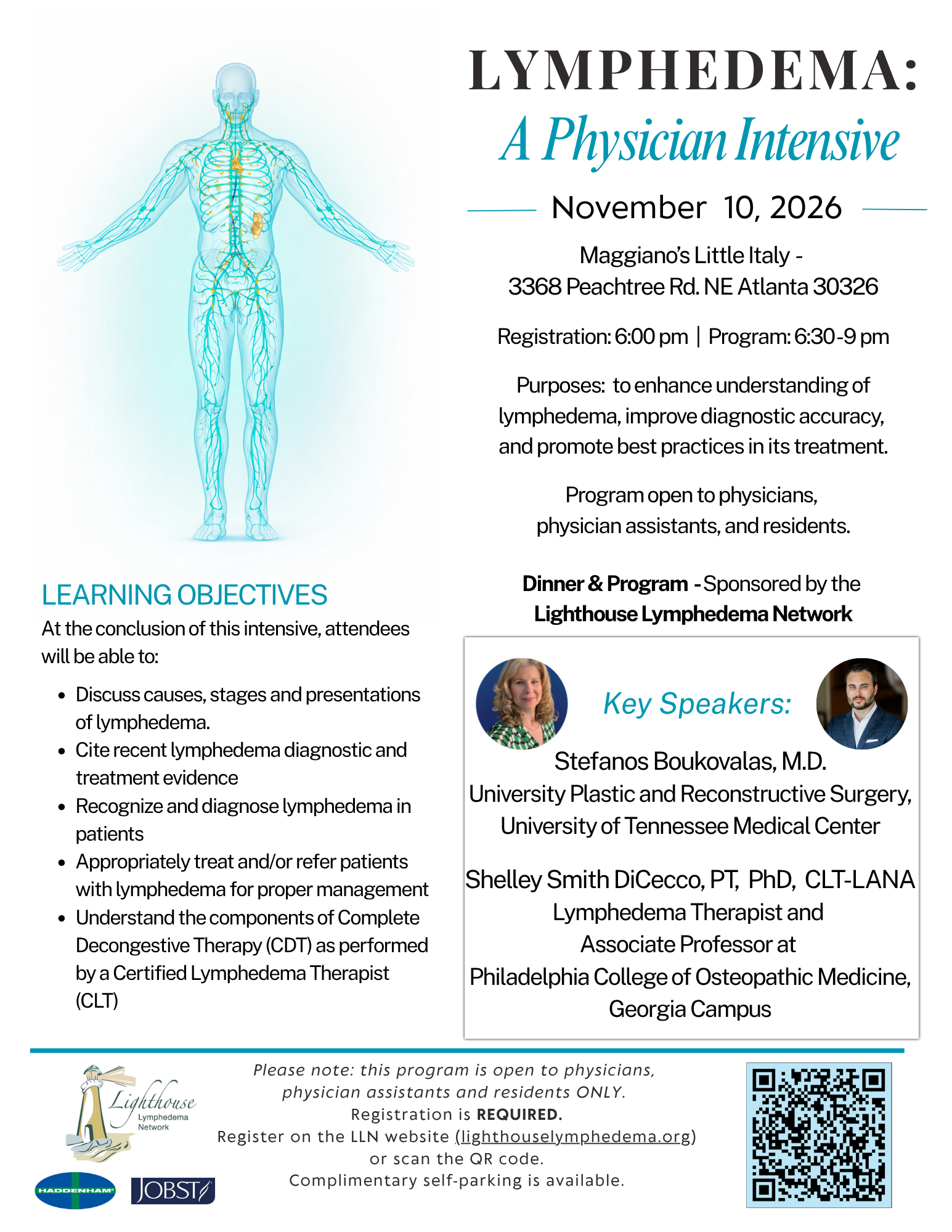


Lymphedema: A Physician Intensive
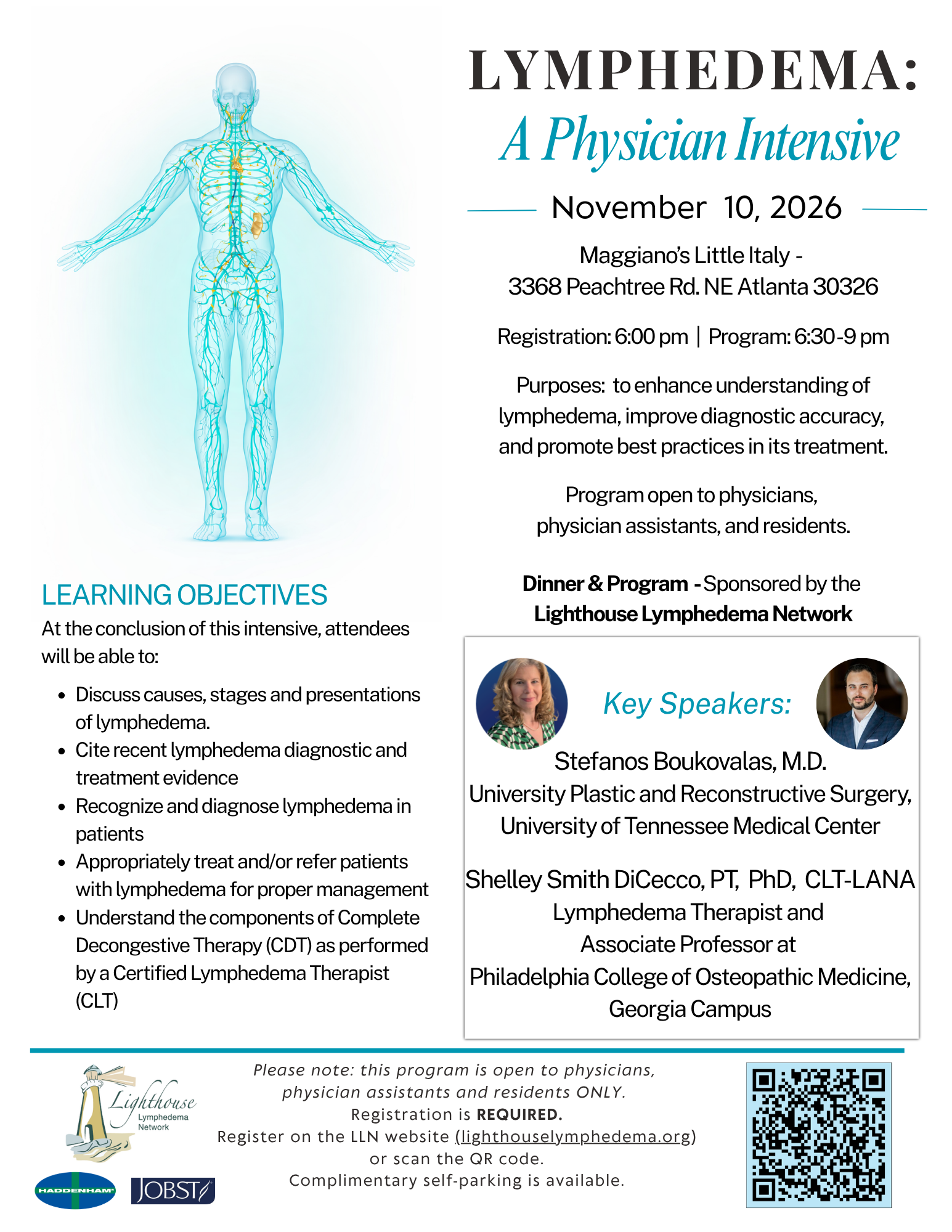
Tuesday, November 10, 2026
The LLN announces LYMPHEDEMA: A Physician Intensive on Tuesday, November 10, at Maggiano's Little Italy, 3368 Peachtree Road NE, Atlanta. This dinner program is designed specifically for physicians, physician assistants and residents in all disciplines. The evening will provide attendees with a deeper understanding of lymphedema and best practices in diagnosising and treating lymphedema. Our key speakers are Dr. Stefanos Boukovalas and Dr. Shelley Smith DiCecco.
A HUGE Thank You to Our Partners
The LLN is thrilled to announce that Georgia Alliance for Breast Cancer (GAABC) has granted the LLN Bandages and Garments Fund $10,000 for the grant year 2026-2027. These funds will be used to provide necessary compression supplies to underserved breast cancer survivors who have lympehdema. Since 2013, Georgia Alliance for Breast Cancer (GAABC) grants have helped the LLN serve approximately 350 individuals with breast cancer-related lymphedema. Thank you GAABC for helping us to continue serving our community!
Stay tuned for news on how to join us at the LLN Cheering Station where we encourage the walkers of the GAABC 2-Day Walk in October!

The Southern Loss Association (SLA) hosted the 2026 Larry Hart Memorial Spring Golf, Cornhole, and Pickleball Outing at Chateau Elan on Thursday, April 23. Each spring, the SLA sponsors this fun and well-attended event benefiting the LLN. This year’s outing raised $4,690 in support of the LLN’s mission. Larry Hart, late business partner of Doug White, was a dedicated supporter of both the SLA and the LLN whose legacy continues through this event. Participants enjoyed a day of friendly competition and camaraderie while giving back. Thank you to the SLA and all attendees for their continued generosity and commitment to making a difference!
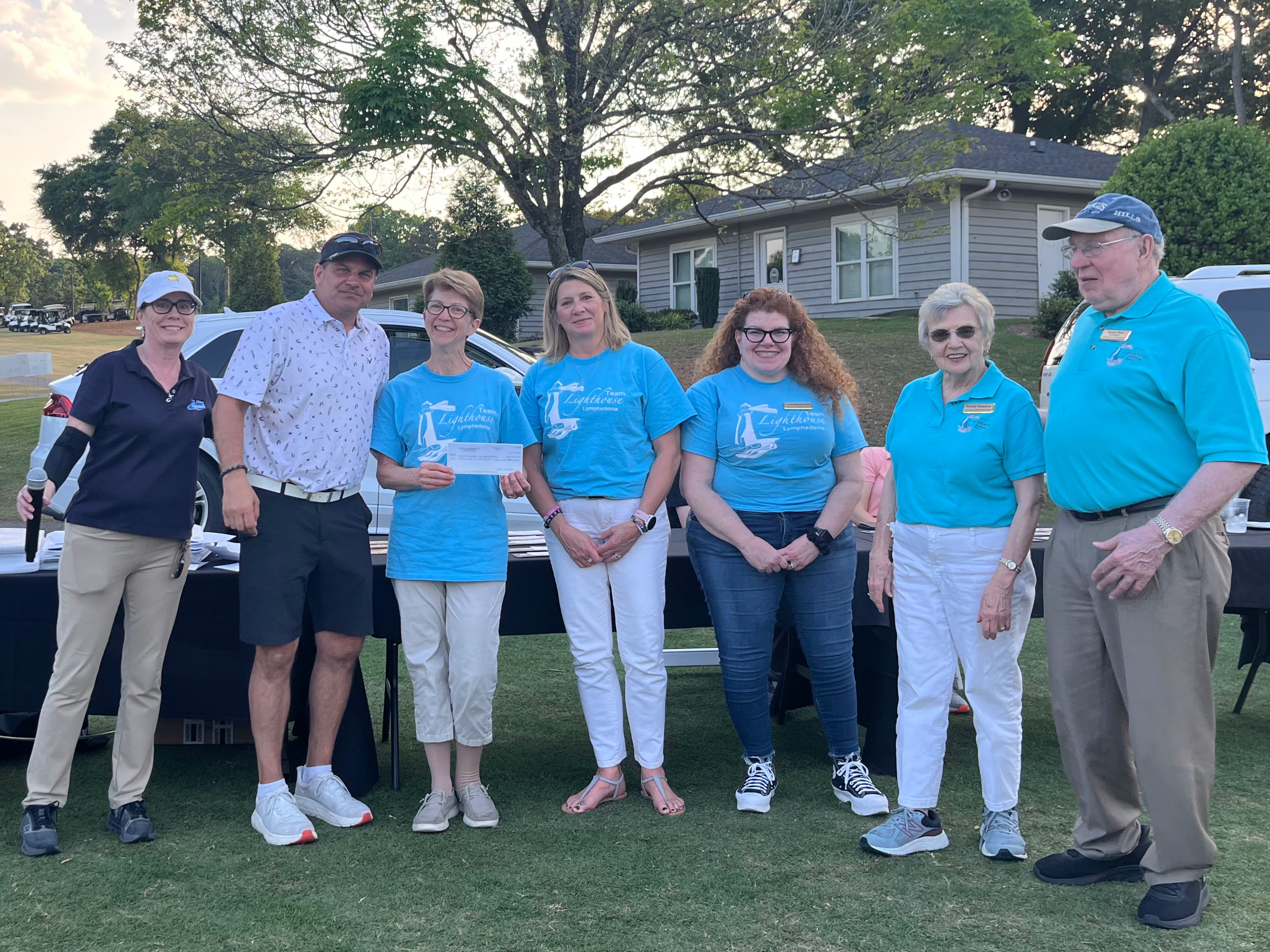
Susan Freeman, Tournament Chairperson; Stephen Phillips, President, SLA; Deb Cozzone, Maureen Clark, Francine Schwartz Schuler, Beverly Thompson, Doug White
Your Contributions help the Lighthouse Lymphedema Network bring internationally-recognized researchers and medical providers to Atlanta for our yearly conferences. Thank you for helping patients and therapists learn more about cutting-edge research and treatments that can improve quality of life for every person.
We now know that every case of inflammation, every illness, every good night’s sleep, and the digestion of every meal is supported by our lymphatic system. Our invisible lymphatics enhance our lives in ways we are only beginning to understand.
Thank you for helping us make the invisible visible!
~The Lighthouse Lymphedema Network Board
About Us
The Lighthouse Lymphedema Network is a 501 (C) (3) organization of individuals who are lymphedema patients, or who have an interest in lymphedema.
5290 Matt Hwy
Suite 502-135
Cumming, GA 30028
Connect With Us


